Fresh, Dried or Frozen Herbs: What Changes in the Pot?
Fresh, dried or frozen herbs suit different dishes. Choose the form that fits your cooking method, desired leaf texture, and the flavor you want to notice.
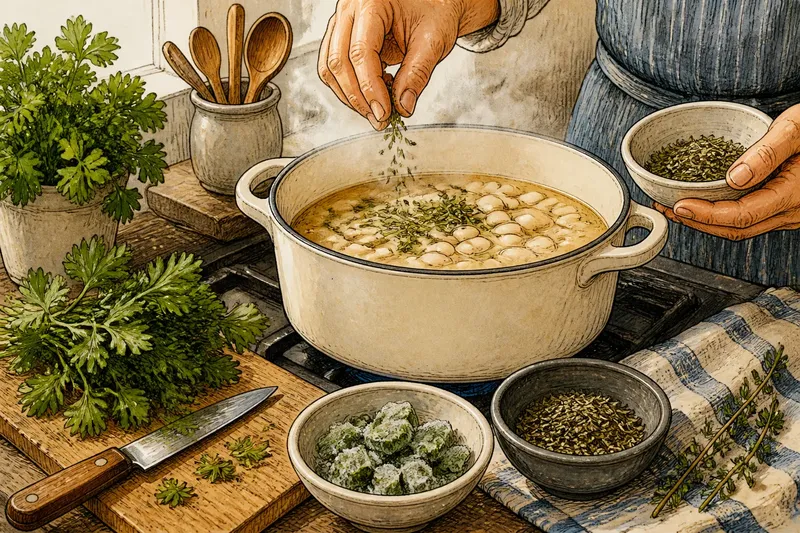
Fresh, dried or frozen herbs change how a dish tastes and feels, so the best form depends on the job the herb needs to do. In a bean soup, dried thyme can season the simmering liquid, while fresh parsley added at the table keeps its color and leafy bite.
Fresh herbs add distinct leaves and a lively finish
Parsley, cilantro, basil, dill, mint and chives contribute recognizable leaves as well as flavor. Add tender herbs after the heat is off or just before serving when you want their aroma and color to remain noticeable.
Fresh herbs also suit dishes where the leaves are part of the texture, such as a chopped herb salad or mint folded into a grain dish. They need trimming and careful storage, so a bunch is easiest to use when it can contribute to several meals.
Sturdier rosemary and thyme can season cooked dishes, but their stems are usually removed before serving. Tender leaves such as basil and cilantro are better suited to a late addition when their fresh character matters.
Dried herbs disperse through food during cooking
Dried oregano, thyme, rosemary and sage are convenient in soups, braises, tomato sauces and beans. Their flavor is concentrated by volume compared with fresh leaves, and a simmer helps the pieces soften and spread through the dish.
Rub dried oregano or thyme between your fingers as you add it to break up larger flakes. Crumble or finely chop needle-like dried rosemary if you want its texture to be less noticeable. Start with a modest amount and taste after it has had time to cook.
Dried herbs can season a vinaigrette, but they will not create the soft leaves or green flecks that fresh parsley provides. Choose another form when distinct leaves are central to the dish.
Frozen herbs suit cooked dishes when a softer texture is acceptable
Frozen herbs are sold as chopped leaves, loose pieces or portions, and products differ in how they are processed and packed. Freezing commonly softens the leaves, but the flavor and moisture vary by herb and product; do not assume every frozen herb will taste like a fresh bunch.
They can be useful in soups, sauces and cooked grains where softened pieces can blend in. Add them according to the package directions, and check whether the product includes water, oil or other ingredients. A portion containing liquid may loosen a thick sauce, so thaw and drain it first if the dish needs a firm texture.
For a garnish that should look leafy and crisp, choose fresh herbs. Frozen leaves can be limp after thawing, making them a less suitable stand-in when appearance and leaf shape matter.
How do you choose and substitute herb forms?
Can dried herbs replace fresh herbs?
They can season many cooked dishes, but the flavor is more concentrated and the texture differs. Begin with less dried herb than the recipe calls for in fresh leaves, then taste and adjust; the right amount depends on the herb and product.
Can frozen herbs replace fresh herbs?
Frozen herbs can stand in for fresh ones in cooked foods when softened leaves are acceptable and the product’s flavor suits the dish. They are less suitable for a crisp garnish, and any added water or oil may change the texture of a sauce or uncooked mixture.
When should herbs go into a dish?
Add dried herbs early enough for them to soften and disperse during cooking. Add tender fresh herbs near the end or after cooking, and use frozen herbs in a cooked dish when their softer texture will not distract.
Which herbs work well in dried form?
Oregano, thyme, rosemary and sage are common choices for sauces and stews that cook for a while. Basil, cilantro and dill are often chosen fresh when their leaf texture or bright finishing flavor is important.
Match herb form to the dish you are making
Rather than starting with a fixed substitution ratio, decide whether you want distinct leaves, a dispersed background flavor or a soft addition. Then account for cooking time and any liquid or oil in the product.
- Long-simmered soup: If you want the herb flavor spread through the broth, add dried thyme or oregano early; if visible leaves matter, add fresh herbs near serving instead.
- Quick pan sauce: If green flecks and a fresh finish matter, stir in chopped fresh parsley late; if softened leaves are acceptable, use a small portion of frozen parsley and check for added liquid.
- Raw dip: If distinct, tender pieces are part of the texture, choose fresh dill, mint or chives; if you only need a background note, use a small amount of dried herb and let it soften before serving.
- Cooked grains: If the grains can absorb a soft addition, fold in frozen herbs and check whether their packing liquid makes the mixture too wet; if the texture is already delicate, use chopped fresh herbs at the end.
- Visible garnish: If the topping should look leafy, choose fresh herbs; if appearance is unimportant and the dish is still cooking, use dried or frozen herbs according to the flavor and moisture they contribute.
- Recipe with a fixed liquid balance: If a frozen portion contains water or oil, thaw and drain it before adding; if its contents are unclear, follow the package directions or choose a plain fresh or dried herb.
Imagine you have a pot of white beans simmering and plan to serve it with parsley on top. You check the pantry and find dried thyme, a frozen parsley portion with water in the ingredient list, and a fresh parsley bunch. Add the dried thyme early to season the beans, then use the fresh parsley after cooking for the topping; the frozen portion remains an option for another cooked dish where a softer, wetter addition is acceptable.
Some recipes use the same herb in two forms for different purposes. Dried oregano can build a background flavor while a little fresh oregano added at the table offers distinct leaves; treat them as separate contributions rather than exact replacements.
Adjust the amount by tasting the finished dish
There is no single conversion that fits every herb, recipe and product. A bunch of leaves, a spoonful of dried flakes and a frozen portion differ in density and moisture.
For dried herbs, taste after they have cooked in the liquid. For fresh herbs, taste once they are chopped and stirred in. For frozen herbs, account for any water or oil included with the portion, and make a small adjustment if the dish becomes looser than intended.
For fresh, dried or frozen herbs, choose the form that fits the dish’s texture and cooking method: fresh for distinct leaves, dried for flavor that can mingle during cooking, and frozen when softened pieces suit the food. Check the package when using frozen herbs, because its ingredients and packing liquid can affect how the dish comes together.