Why Toasting Spices Changes Their Aroma
Why toasting spices changes their aroma, plus clear cues for stopping and choosing a skillet or oven so whole spices smell fragrant, not scorched.
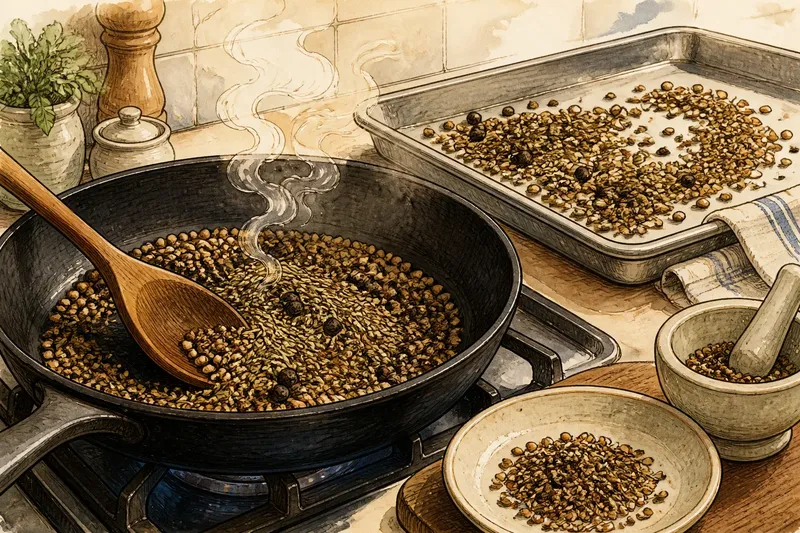
Toasting spices changes their aroma because dry heat makes some fragrant compounds easier to smell. With whole cumin, coriander, fennel, or peppercorns, gentle warming can shift a raw, dusty scent toward something fuller; too much heat, however, can make the aroma acrid before the spices look badly burned.
The useful decision is not how many minutes to toast. It is which heat source suits the amount and your attention, and what sensory cues tell you to stop. A skillet offers close control for a small batch, while an oven can work well for a shallow, visible layer.
Toasting spices releases aroma without adding fat
In a dry pan or oven, heat warms the spice and some aromatic compounds escape into the air. That is why a toasted seed may smell more noticeable at the stove: some of its aroma is moving into the room rather than remaining in the spice. Heating can also alter how its existing flavors are perceived, lending a rounder, sometimes nuttier impression.
Toasting is not the same as frying. The spice sits on a dry surface, without oil or butter; frying coats it in fat, which can carry aroma into a dish but changes the cooking method. Nor does dry heat make every spice sweeter or better. A delicate spice can lose its liveliness if heated too hard, and ground spices scorch especially quickly because their fine particles are exposed to heat across more surface.
Whole spices are often easier to toast than ground ones because their larger pieces warm differently, but the effect varies with the spice, pan, and heat. Rather than assuming the outside protects the center, watch and smell them as they warm. Once toasted, whole spices can be used as they are or crushed in a mortar and pestle or spice grinder, depending on the texture the dish needs.
Choose a skillet for small batches and close control
A heavy-bottomed skillet, such as cast iron or stainless steel, suits a small quantity that can spread across the cooking surface. Set it over low to medium-low heat, add the whole spices to the dry pan, and keep them moving with a wooden spoon or by gently shaking the pan. Stirring helps prevent hot spots from darkening some seeds while others remain cool.
This approach suits a cook who is already at the stove and can focus on the changing smell. It is convenient when a recipe calls for only a spoonful of cumin or coriander. A thin pan or an overly hot burner can create sharp temperature changes, so use low heat and stay attentive rather than relying on a timer.
Choose the oven for an even, hands-off layer
The oven is useful when you want to toast more whole spices at once or prefer heat surrounding a thin layer. Spread them on a rimmed baking sheet, use moderate heat, and check their aroma frequently instead of setting them aside for a fixed duration. A small amount can be difficult to monitor on a large tray, so choose a pan that keeps the spices visible in a shallow layer.
This option suits a cook who has other preparation to do but can still check the oven regularly. It is less immediate than a skillet: removing the tray takes longer, and the hot sheet continues to warm the spices briefly after it leaves the oven. Tip them onto a cool plate or bowl as soon as they smell ready to limit carryover cooking.
Use the smell and sound to decide when to stop
Begin with modest heat and pay attention as the spices warm. Their fragrance should become clearer and more inviting; some seeds may shift in color or make a faint crackling sound. These signs vary by spice, so use aroma as the main guide, with visual and sound cues as support.
Stop when the smell is distinct but not smoky, bitter, or sharp. Pour the spices out of the hot pan promptly, since residual heat can keep cooking them. If they smell burnt, do not try to hide that flavor by adding more ingredients; starting over with a fresh portion is usually the cleaner choice.
Say you are preparing lentils and have a spoonful of whole cumin seeds. You warm a dry skillet gently, keep the seeds moving, and notice their earthy scent becoming fuller; when it turns clearly fragrant, you transfer them to a cool plate before adding them to the dish. The result to look for is a stronger cumin aroma without a charred smell, not a particular shade or elapsed time.
Which toasting method suits your kitchen?
Can I toast spices in a skillet?
Yes. A dry skillet is practical for a small batch because you can keep the spices moving and respond as their fragrance changes. Lower the heat if they begin darkening before their aroma develops.
Is the oven better for a large batch?
It can be, provided the spices are spread in a shallow, visible layer and you check them regularly. If the batch is too small to monitor easily on the tray, a skillet may offer better control.
Should I toast ground spices?
Ground spices heat quickly and can scorch before you have time to react, so recipes often add them directly to food or briefly bloom them in oil instead. Follow the recipe’s method and watch closely if it specifically calls for dry-toasting a ground spice.
Choose the method by quantity and attention
For a small quantity and a cook who can stay beside the stove, use a skillet. For a broader batch that can sit in a visible layer, use the oven and account for the tray’s lingering heat. If neither method lets you monitor the spices, postpone toasting until you can pay attention rather than trusting a rigid clock.
For why toasting spices changes their aroma, the practical lesson is that heat is a prompt, not a timer: gentle warmth makes fragrance easier to detect, while attention lets you stop before it turns harsh. Let the smell guide the final moment, then move the spices off the hot surface so the aroma you wanted does not become the flavor you were trying to avoid.